The velocity of light is not relative, space and time are. The velocity of light isn't just how fast light goes, it's a number somehow woven into reality itself — that is, space and time organize themselves around "c".
The phrase “survival of the fittest” erroneously attributed to Charles Darwin (1809-82) [photographed below by his son in 1874 at 65] was coined by the English 19th century philosopher Herbert Spencer (1820-1903) [aptly caricatured left] to denote a biological “life force” at work in society having direction and an end-point. Spencer contended that the most intelligent, ambitious, and productive amongst us inevitably win out, and thereby, through some magical improbable serendipity, benefit all society in some vague way. This so-called “social Darwinism” adulterates Darwin’s genius and makes a mockery of the vital mechanism he so carefully thought through and presented in The Origin of the Species. This social Darwinism speaks to the philosophical roots of the worst republican political dogma. The thinking is erroniously flawed. Favoring the rich and powerful does not benefit society at large.
Darwin at 65
The essential fallacy in Spencer's thinking is that Darwin's insight had nothing to do with a biological "life force" but rather focused on the major problem of biological complexity, namely how did this complexity arise? Francis Crick (1916-2004) [pictured below, right in 1953], 1962 Nobel Prize co-winner for his work in the molecular structure of DNA explains it succinctly as follows:
DNA discoverers
"Natural selection, Darwin argued, provides an “automatic” mechanism by which a complex organism can survive and increase in both number and complexity. I say “automatic” to mean that we need not involve a special “life force” or “intelligence” to direct this process.
How does natural selection work? The essential trick is to ensure that in favorable circumstances an organism will be able to multiply very greatly. This is usually done by a process of geometrical multiplication, by which one organism gives rise to several others, identical to itself, each of which in turn can produce identical descendents. The unavoidable “copying errors” in this process will make some of these descendents differ (usually rather slightly) from the original ancestor, and some of these must be capable of being copied exactly. As the population increases a time will come when the environment can no longer support such a large population. There will then inevitably be the elimination of some organisms, leaving others as survivors who alone will produce descendants -- will thus automatically be selected. A really beautiful mechanism, the discovery of which is one of the great intellectual triumphs of our civilization" ..."Of Molecules and Men".
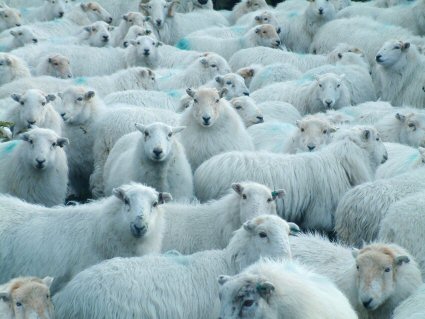
''Mahomet made the people believe that he would call a hill to him, and from the top of it offer up his prayers for the observers of his law. The people assembled. Mahomet called the hill to come to him, again and again; and when the hill stood still he was never a whit abashed, but said, 'If the hill will not come to Mahomet, Mahomet will go to the hill.'”
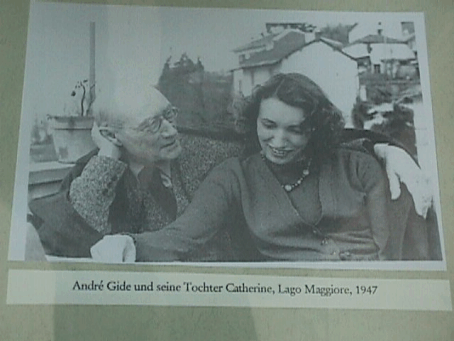
American loud-mouth blowhard “businessman” of dubious notoriety, Donald Trump, on a recent TV talk program put his views on nepotism in stark focus, while lamely justifying the abrupt dismissal ("you're fired") of a long-serving faithful trusted employee and her subsequent replacement by one of his own (flesh and blood that is), haughtily declaring in an offensive display of unscrupulous self-importance that he “loved nepotism … it’s good!”. Brings to mind Andre Gide’s (1869-1951) succinct assessment of such galling progenitorial aloofness: “Families, I hate you! Shut-in homes, closed doors, jealous possessors of happiness”.
"The human mind has two main scales on which to measure time. The large one takes the length of a human life as its unit, so that there is nothing to be done about life, it is of an animal dignity and simplicity, and must be regarded from a peaceable and fatalistic point of view. The small one takes as its unit the conscious moment, and it is from this that you consider the neighbouring space, an activity of the will, delicacies of social tone, and your personality" Seven Types of AmbiguityWilliam Empson (1906-84)
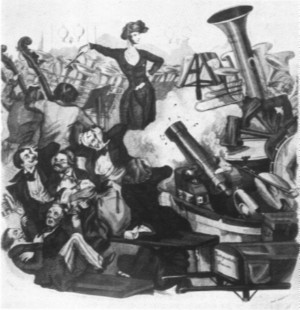
"It is an extremely original composition, full of weird effects and bizarre flights of fancy. It is like a tale by Hoffmann. It plunges you into an indefinable malaise; it torments you like a bad dream, and fills your imagination with strange and terrible images. It must be the case that nowadays this tower is inhabited by hundreds of owls and ospreys, and the surrounding ditches must be filled with snakes and toads. Maybe it served as a lair for brigands or was the fortress of some medieval tyrant. Perhaps some illustrious prisoner, some innocent and persecuted beauty, expired there in the pangs of hunger or under the executioner’s sword. You can imagine and believe everything when you hear these strident violins, croaking oboes, lamenting clarinets, groaning basses and moaning trombones. The Overture of the Tower of Nice [later to be revised and renamed Le Corsaire*] is perhaps the strangest and most peculiar composition to have been created by the imagination of a musician".
... observed by a contemporary music critic of this Hector Berlioz (1803-69) work.
secret of success ... do whatever can be done to avoid losing
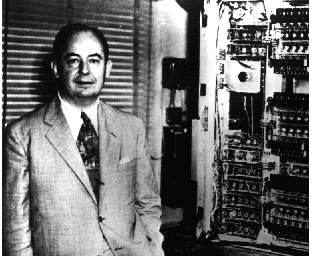
John von Neumann (1903-57), the father of the modern digital computer, loved toys and playing games for fun, so much so that he compiled an immense library of jokes which he used to liven up a conversation. Undoubtedly this passion contributed to his important work in Game Theorywhere he determined that the secret of success was not to aim to win, but to do whatever can be done to avoid losing. Not so much fun were his crucial calculations on the implosion design of the atomic bomb, affording a more efficient, deadly weapon. In the end he lost, succumbing at 54 to bone cancer attributed toradiation exposure to the atomic tests on Bikini atoll.
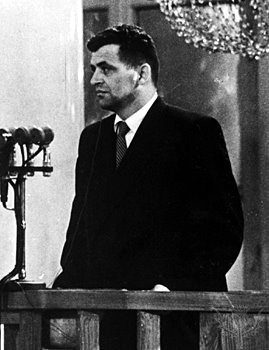
The 30 year old American pictured here on trial in 1960 as a spy in a cold-war Soviet Union court room, spent 17 months in prison for it. He literally flew over downtown Moscow alone, unarmed and unafraid. The related so-called 'U2 Incident' grabbed world headlines at the time, and afforded him more than his share of the proverbial allotment of 15 minutes of fame. He died in 1977 at 47 when a television news helicopter he was piloting crashed in Los Angeles. ... Francis Gary Powers (1929-77) an American pilot whose Central Intelligence Agency (CIA)U-2 spy plane was shot down while flying a reconnaissance mission in Soviet Union airspace, causing the 1960 U-2 incident.
“Why did I come into the world without any choice?” asks Edvard Munch (1863-1944), the Norwegian artist who pictorially coined the existential notion of ‘angst’ in the lithograph "The Scream" in 1893, described by a noted art critic at the time as: "a profound and deep-seated spiritual condition of insecurity and despair".
Self Portrait with the Grim Reaper
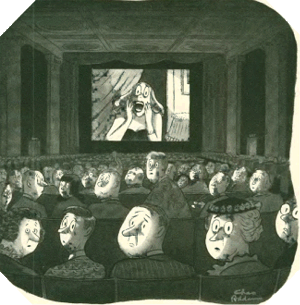
Kindred to Munch’s work is the surrealistic artistry of Roland Topor (1938-97), a French artist and writer who also explored alienation and identity, asking disturbing questions about how we define ourselves and social conformity. He was a Polish Jew spending his early years in Savoy hiding from the Nazi peril:
-------------------------------------------------------------------------------- WOODY ALLEN: That's quite a lovely Jackson Pollock, isn't it?
GIRL IN MUSEUM: Yes it is. WOODY ALLEN: What does it say to you? GIRL IN MUSEUM: It restates the negativeness of the universe, the hideous lonely emptiness of existence, nothingness, the predicament of man forced to live in a barren, godless eternity, like a tiny flame flickering in an immense void, with nothing but waste, horror, and degradation, forming a useless bleak straightjacket in a black absurd cosmos. WOODY ALLEN: What are you doing Saturday night? GIRL IN MUSEUM: Committing suicide. WOODY ALLEN: What about Friday night? GIRL IN MUSEUM: [leaves silently]
"... the Universe is not only queerer than we suppose; but it is queerer than we can suppose"
... J.B.S. Haldane, geneticist and evolutionary biologist (1892-1964)
Apparently more than we can know. In recent years astrophysicists have become increasingly convinced that there is a vast amount of material in the universe that is not matter as we know it. It does not glow at all. This mysterious so-called "dark matter" is believed to be the most common stuff in the universe
Today’s vast stifling network of road systems catering to the insatiable lust for cars was once presaged by a sudden emergence of coaches. In Europe from around 1810 to the 1830's, coaches ruled the newly sealed roads and reached fantastic speeds of around 12 miles per hour allowing a free and easy flow of traffic, passengers and goods. It seems odd that this short-lived coach fad should take hundreds of years to incubate only to take off for some few decades to almost die out overnight with the arrival of the train.
they go with the greatest speed manageable
It would be another hundred years before roads regained their popularity. A writer at the time observed "... it is remarked that when they travel on the road they go with the greatest speed manageable ... they could not have gone at less than 14 miles per hour. This is the usual pace at which they go ... several persons at different times have been thrown down and hurt not being able to get out of the way soon enough".
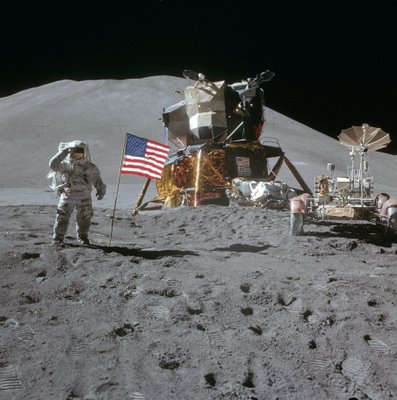
Twelve men have walked on the moon. Nine are still alive, but this man isn't one of them. He died of a heart attack 15 years ago at the tender age of 61.
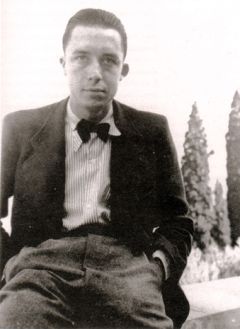
"The only real question of philosophy is whether or not we should commit suicide"
"From the depths of my future, throughout the whole of this absurd life I'd been leading, I'd felt a vague breath drifting towards me across all the years that were still to come, and on its way this breath had evened out everything that was then being proposed to me in the equally unreal years I was living through"
In amongst the Inner Hebrides off the western coast of Scotland, Nature has placed one of her greatest marvels, namely Fingal’s Cave, its enormous entrance rising in barren grandeur from the ocean, lined with innumerable fluted columns. Within lies a kind of natural throne imposing enough to suggest the kingly seat of Neptune himself. When a storm is raging, the scene at Fingal's Cave is said to be sublime.
The prolific Scottish writer and poet, Sir Walter Scott (1771-1832), described it as "one of the most extraordinary places I ever beheld, baffling all description” and induced Felix Mendelssohn (1809-47) to make a storm-tossed visit there in 1829. The sight and sound of the sea swell tumbling into the Cave made a profound impression on the young 20 year old composer. The theme which he later developed into his ever-popular HebridesOverture apparently occurred to him on this trip, immortalizing the mystical aura of this curious freak of nature.
The most striking aspect of the music is its otherworldly tone-painting quality. One can hear the haunting breaking of waves, almost see the basalt columns and strange colors, and overall, sense the overwhelming vastness of the cave:
A widely held hypothesis is that people lose intelligence as they age, the so-called Flynn Effect, arrived at by comparing IQ tests of elderly people with today's young people. This flys in the face of comparisons of IQ scores of these same "elderly" people to their own era (a half a century before) where apparently IQ losses with age are minimal. One has to wonder about the IQ test makers themselves. Surely they've changed along with their various indeterminate intelligence "measuring" devices. Who knows? Where's Einstein when you need him?
This is a stunning picture of a man standing at the south pole a century ago after a grueling trek, man-hauling sleds some 800 miles, and now facing the same going back. Conditions were appalling: temperatures plummeting to minus 45 degrees F., nearly impassable terrain, blinding blizzards, or blinding sunshine. "Great God! this is an awful place..."* he wrote in his journal at the time in 1912, before long distance communications and airplanes. He and his four companions didn’t make it back, and their fate was unknown for almost a year after they had actually perished. A sense of the foreboding inevitableness of a doomed expedition is etched in the man’s anguished face.
*This remarkable iconic photo taken 17Jan12 (discovered in a tent a year later with their frozen bodies) shows British explorer Robert Scott [left] and his companions having just arrived at the South pole. It dramatically conveys in their unposed postures the dazed dismay and deep disappointment they feel at the crushing discovery that the Norwegians had beaten them to the pole just four weeks earlier. Scott's discouragement is painfully palpable in his journal entry for that day:
“Great God! this is an awful place and terrible enough for us to have laboured to it without the reward of priority. Well, it is something to have got here, and the wind may be our friend to-morrow. ... Now for the run home and a desperate struggle. I wonder if we can do it”.









 This is a stunning picture of a man standing at the south pole a century ago after a grueling trek, man-hauling sleds some 800 miles, and now facing the same going back. Conditions were appalling: temperatures plummeting to minus 45 degrees F., nearly impassable terrain, blinding blizzards, or blinding sunshine. "Great God! this is an awful place..."* he wrote in his journal at the time in 1912, before long distance communications and airplanes. He and his four companions didn’t make it back, and their fate was unknown for almost a year after they had actually perished. A sense of the foreboding inevitableness of a doomed expedition is etched in the man’s anguished face.


